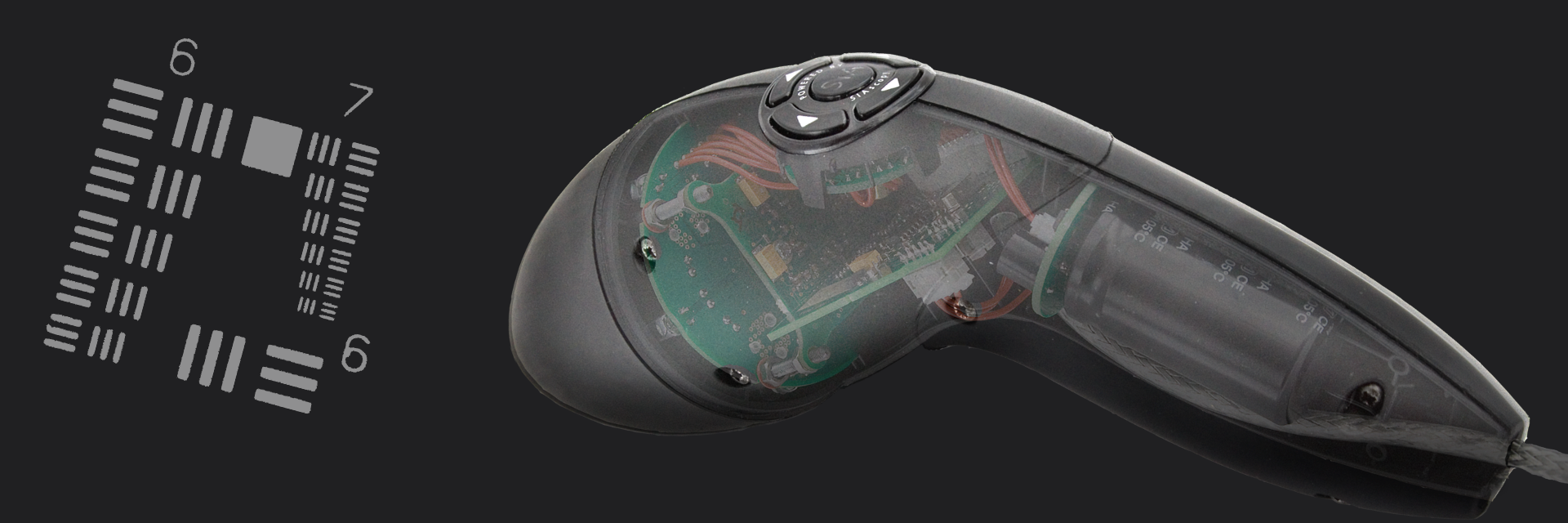
Some projects I’ve worked on
I’ve worked on a wide range of product development projects, some for years and some for much shorter. The featured selection below gives a good overview of the type of work I get involved in.

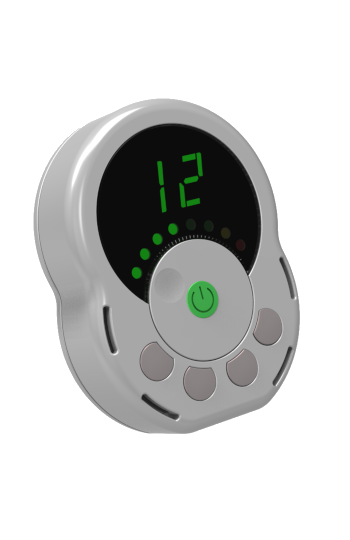
Breathing sensor
Many patients are prescribed supplementary oxygen therapy, where the air they breathe in is enriched in oxygen content.
A large proportion of the oxygen flow does not end up in the patient’s lungs. It is wasted, at a significant cost. We were asked to create a robust system to detect a patient’s breathing pattern, to allow for a safe, gated supply of oxygen.
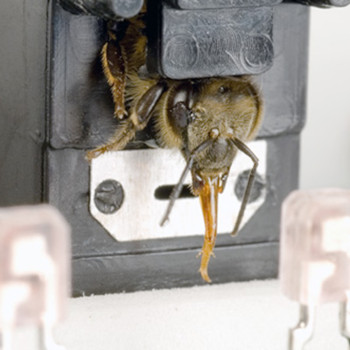
Bomb-sniffing bees
Honeybees have an exceptional sense of smell and can detect trace concentrations of volatile compounds. The challenge was to translate this biological capability into a practical detection system — one that could be trained, deployed and interpreted reliably to screen luggage and cargo in airport terminals.
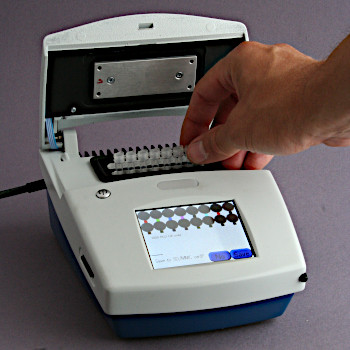
Luminescence reader
A molecular diagnostics assay had promising performance, but deploying it in practice required a reader that was sensitive yet robust and affordable. Existing readers were expensive, bulky and optimised for lab environments, creating a gap between assay performance and real-world deployment.
The projects featured above give a good idea of the typical challenges we address in the development of sensor-enabled products. Below are some shorter stories that also illustrate the breadth of what we do.
Feasibility: Cylinder lock decoder
We were asked by an SME working with the UK security sector to create a proof-of-concept cylinder lock reader device, that would be able to probe a lock and determine the matching key shape within seconds. The device was to be based on a novel, ultra-miniature force sensor.
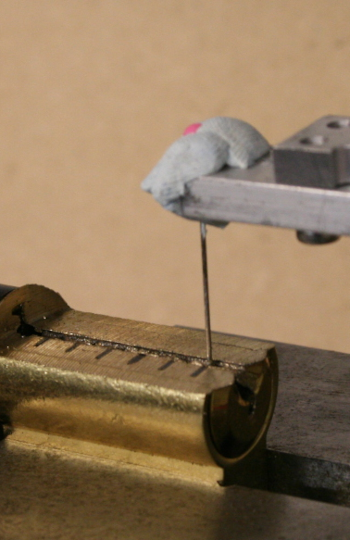
We purchased a selection of best-selling front-door locks, milled half of the body and barrel away to expose their locking pins, and built a small, sensitive force probe to use in testing the client’s underlying assumptions.
These proved to be incorrect, rendering the concept infeasible. Though not what the client hoped for, this finding did avoid spending more time and money on a product destined to fail.
Manufacture: TIG-welding trailing shield
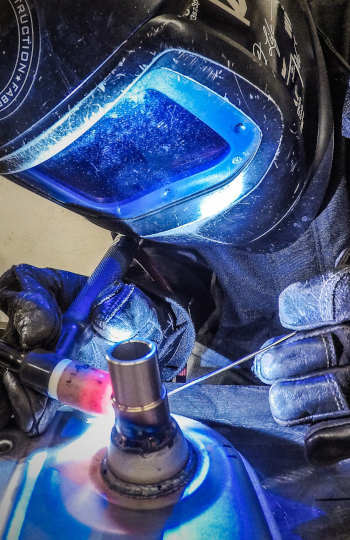
Huntingdon Fusion Techniques (HFT) is a Welsh SME who supply a range of products for use in TIG welding, including trailing shields: these attach to the torch and direct a flow of inert gas over the weld as it cools down. This keeps the weld from oxidising and improves weld quality.
HFT were facing supply chain issues and wanted to be able to manufacture their trailing shields in-house. They needed to be able to make a wide range of sizes on-demand, as shields are specific to the diameter of the pipe being welded.
We created a shield design that could be made in-house from a small selection of base components, and worked with HFT to realise a small and flexible in-house manufacturing cell geared towards rapid pay-back.
Collaborative development: FlexBook
We worked with CIMLAE (the Centre for Integrated Manufacturing in Large-Area Electronics of the University of Cambridge) and a consortium from the printed/flexible electronics industry, to create a small series of show book demonstrators (“FlexBooks”).
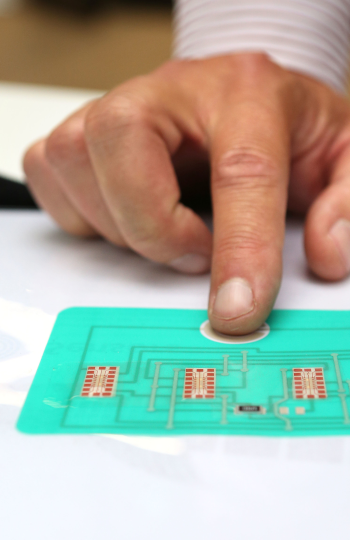
FlexBook paired a conventional electronics control circuit integrated in a leather portfolio binder with interchangeable, configurable pages with printed and flexible electronics components and modules: interconnects; OLED and e-paper displays; touch, pressure and temperature sensors; NFC tags, active circuits and batteries.
Thought the product concept worked, it proved difficult for some industry partners to commit the resources and effort to produce 50 specific demonstrator pages. Printed and flexible electronics are primarily designed for high volume production at very low unit cost, which was understandably where partner’s priorities lay.
Mass consumer product: baby monitor
I don’t usually get involved in consumer product development, but on this occasion I assisted on of my regular expert associates. We set out to find ways to reduce bill-of-materials cost for a baby monitor, to be produced in China at volumes over 100,000 units.
At such volumes it makes sense to hunt for opportunities to reduce BoM cost: a unit cost saving of 10p translates to an extra margin of £10,000…
We identified over £1 in BoM savings, mainly from implementing mechanical functions (switches, interconnects, volume control) in the injection-moulded plastic case and stamped metal parts.
For my usual product areas such high-volume optimisation can be of interest for e.g. test consumables or other disposable accessories.